
Every real estate deal starts with one number: what you pay for the finished product. Adaptive reuse, converting an existing hotel, office, or rental building into housing, is a way to make that number smaller than anyone building from the ground up can match. Here is the arithmetic, in plain English.
What does "basis" mean in a real estate conversion?
Basis is the all-in cost of producing a finished apartment: the purchase price of the building, plus the cost of converting it, carrying costs and fees included, divided by the number of units delivered. A conversion buys most of its finished product on day one. The structure, the foundations, the parking, the utility connections, and the land are already there, already paid for at the price of an obsolete hotel rather than the price of new housing. The conversion budget then covers what actually changes: unit interiors, systems, amenities, and site work. Because the acquisition prices the building against its weak current use rather than its future use as housing, the completed apartment can carry a total basis well below what the same unit would cost to build new on the same corner.
Why does replacement cost matter to an apartment investor?
Replacement cost is what it would take to build the same building today: land, materials, labor, financing, and time. It acts as a long-run ceiling and floor for value. When apartments trade far above replacement cost, developers build more until rents and prices settle; when an owner's basis sits below replacement cost, competing supply cannot be created without spending more than the owner already has invested. That gap is protection. A conversion bought and completed below the cost of new construction can offer rents that ground-up projects cannot match while maintaining margin, and it holds a structural advantage in any market where construction costs stay elevated. Basis below replacement cost is a position, fixed at acquisition. It does not depend on the market rising to work.
How does a hotel conversion reach a lower basis than ground-up development?
Three ways. First, acquisition: an underperforming hotel is priced on its hospitality cash flows, which for an obsolete property are weak, so the real estate often trades below the value of its location, structure, and entitlements. Second, scope: a conversion does not pay for excavation, structure, or core infrastructure; it pays for interiors, systems, and amenities. Third, time: STILL Property Group underwrites conversion timelines of 12–18 months from acquisition to delivery, against multi-year timelines for comparable ground-up projects. Time is cost. Every month saved is a month of carrying costs, taxes, and insurance that never accrues, and a month sooner that leasing revenue begins. The result is a finished Class A apartment community delivered faster and at a basis new construction cannot reach.
Where is the risk in the conversion model?
Conversions carry real risks, and honest math includes them. Structural and environmental surprises can expand scope after closing; municipal approvals and rezoning can take longer than underwritten; construction costs can move; and lease-up can run slower than projected, delaying refinancing or sale. The mitigants are discipline: engineering and environmental diligence before closing, entitlements resolved before or at acquisition, in-house sourcing and project management to control scope and cost, and underwriting anchored to current operating data rather than best-case assumptions. No structure eliminates risk, and an investment in any conversion project can lose value. Buying below replacement cost means the model does not require rent growth or market timing to justify the position.
What proves the conversion math works in practice?
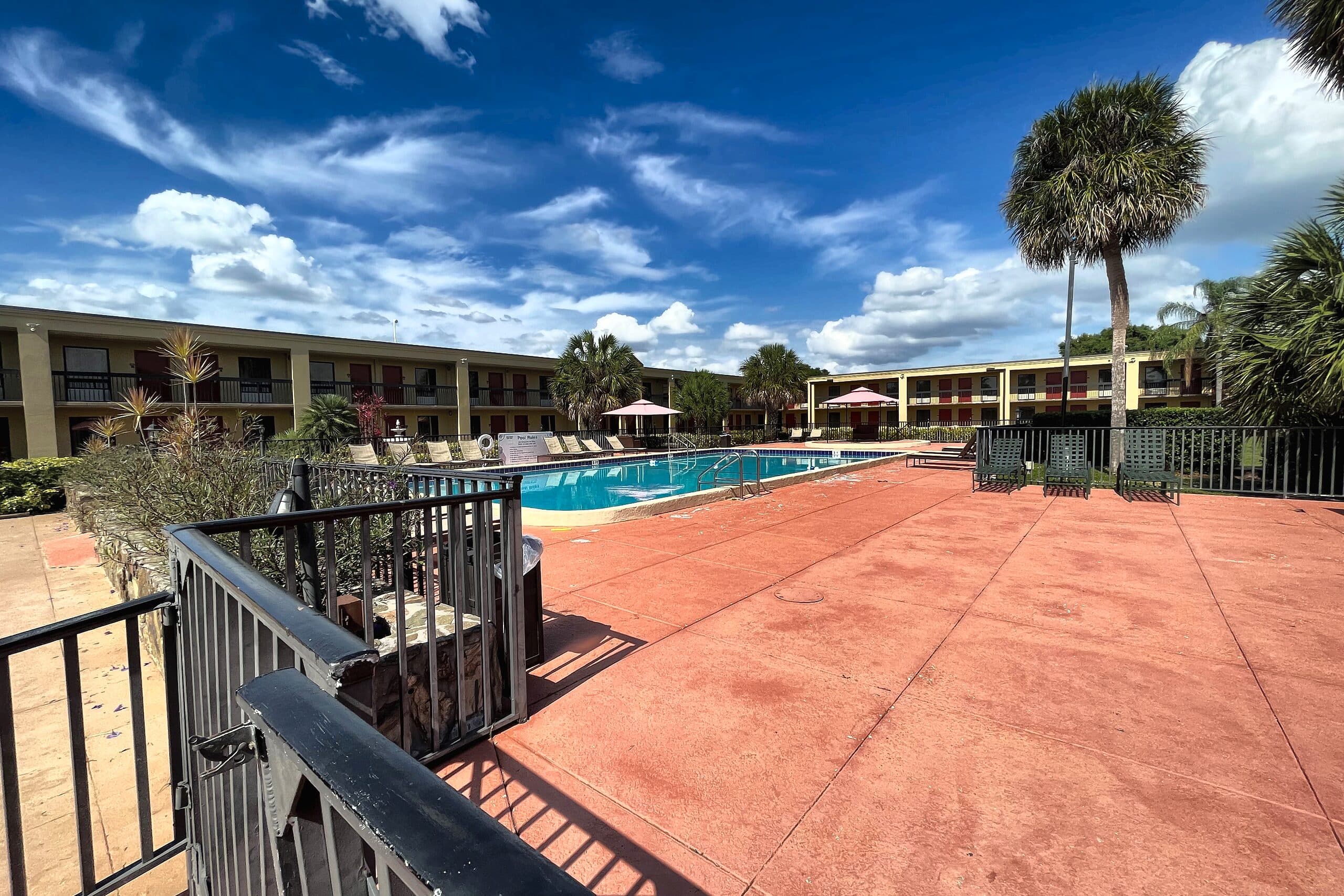
The Jade Winter Haven. STILL Property Group acquired a 330-key hotel in Winter Haven, Florida, converted it into 238 apartments, leased it up, and refinanced the stabilized community. Behind that project stands a longer lineage: The Hutton Group, STILL's affiliate, has executed conversions since 1992, spanning co-op-to-condo, mixed-use, and master-lease transactions across the country, documented in part in its published case studies. The arithmetic of buying existing buildings below the cost of building new ones has held across cycles, structures, and states since 1992. Past performance is not indicative of future results. The math itself is measured at acquisition, and it either clears the bar or it does not.
Read the projects behind this thesis on our track record page, or see the full investment approach in our thesis.
Sources
- STILL Property Group, Offering Memorandum
- The Hutton Group, conversion case studies (2011)